Sitkum Riparian Enhancement
Restoring the East Fork: Building a Healthier Future for the Coquille River
The Sitkum Riparian Enhancement Project is helping restore and protect the East Fork of the Coquille River by strengthening streambanks, reducing erosion, and creating healthier habitat for fish and wildlife.
Working closely with supportive landowners, Coos Soil and Water Conservation District (SWCD) led a large-scale riparian restoration effort designed to improve the long-term health and resilience of the river corridor.
Planting for the Future
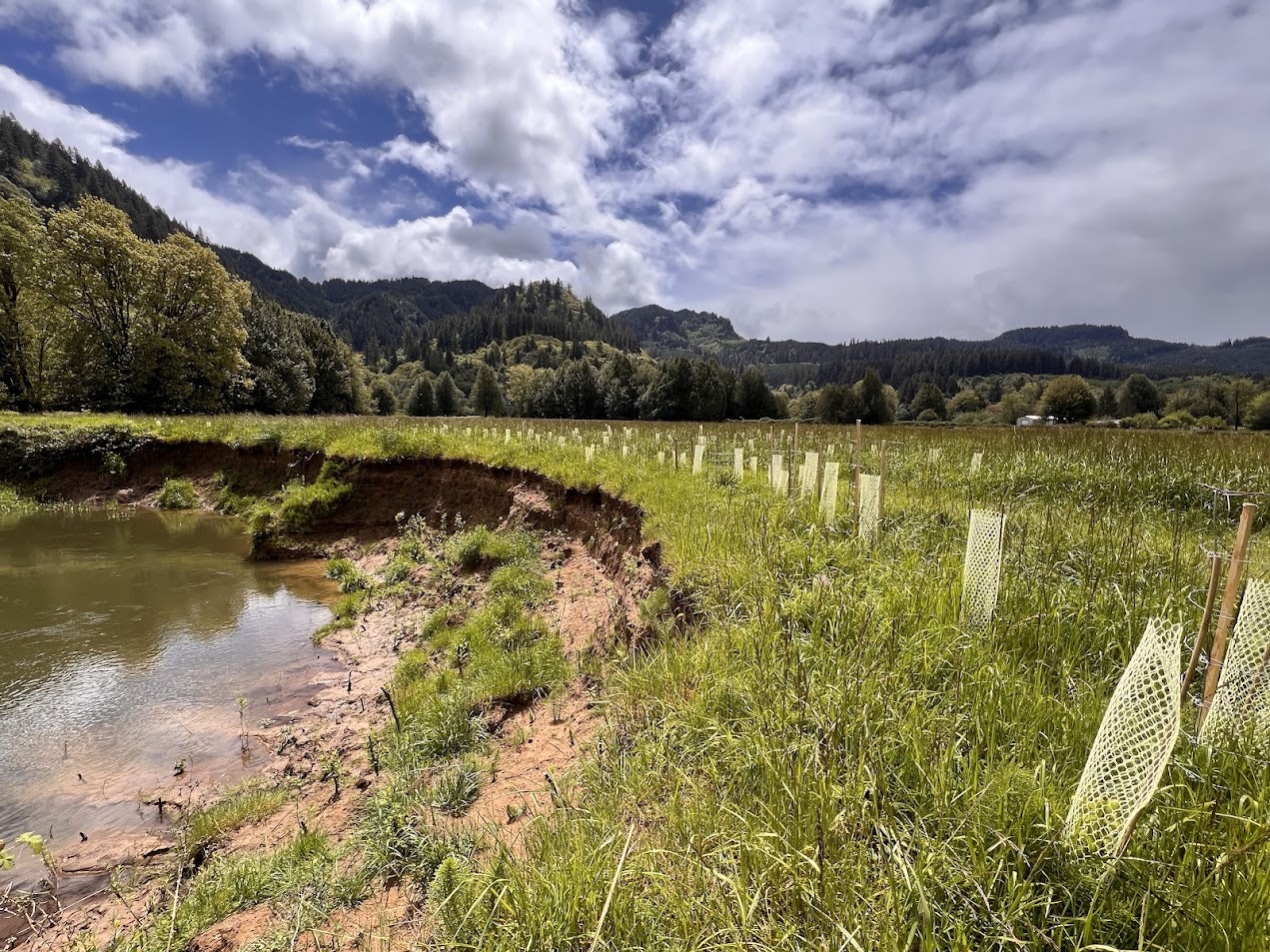
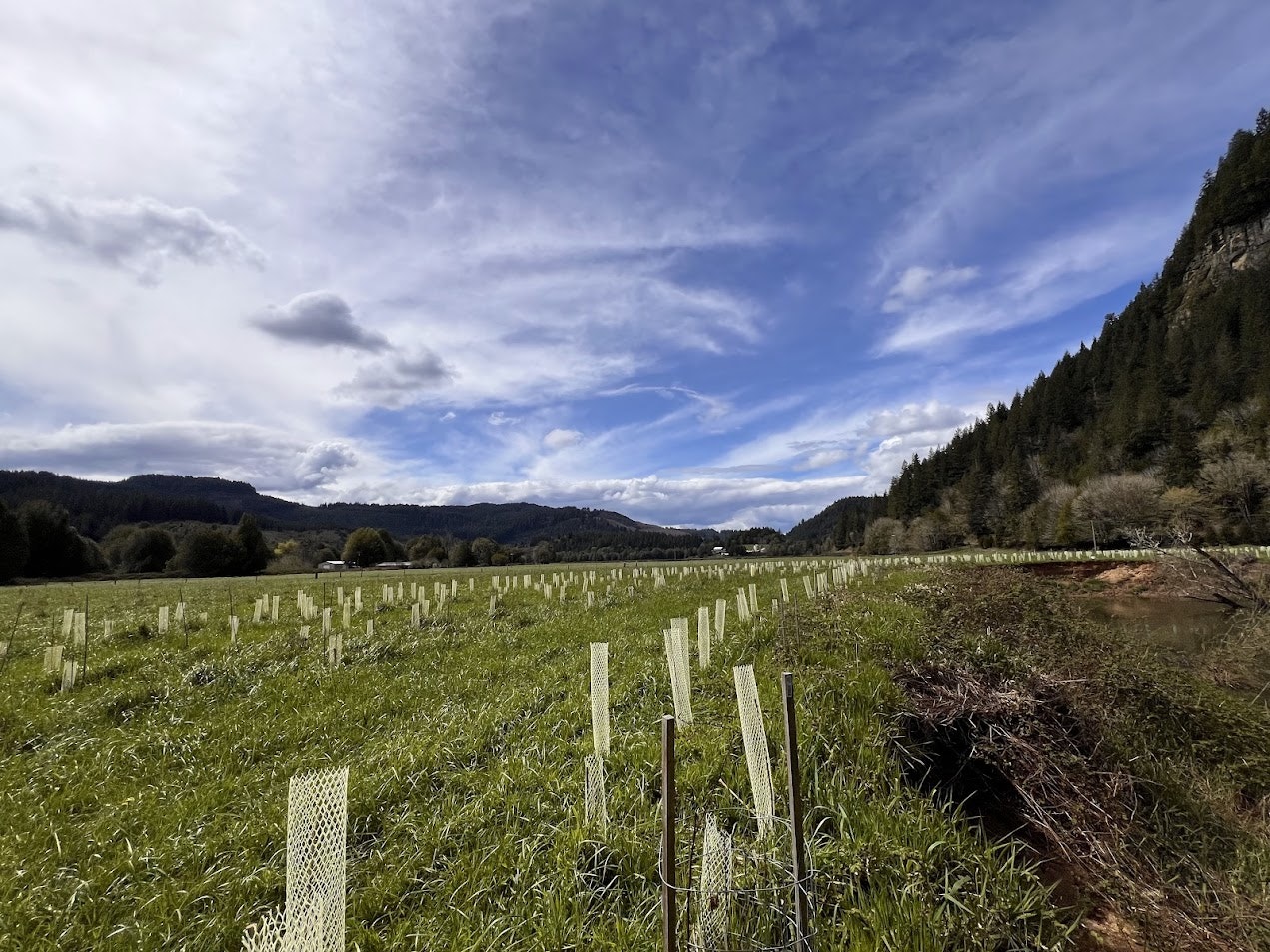
During the winter and spring of 2023–2024, Coos SWCD staff, landowners, and dedicated volunteers came together to plant more than 2,000 native trees and shrubs along the streambanks.
Species planted included:
- Willow
- Red-osier dogwood
- Black cottonwood
- Sitka spruce
- Douglas-fir
These native plants play a vital role in stream restoration. Their roots help stabilize streambanks and reduce erosion, while their growing canopies will eventually provide shade that helps keep water temperatures cooler for fish and other aquatic species.
Supporting Young Plants Through Tough Conditions
Establishing a healthy riparian forest takes time, especially in an area where hot, dry summers can stress young vegetation.
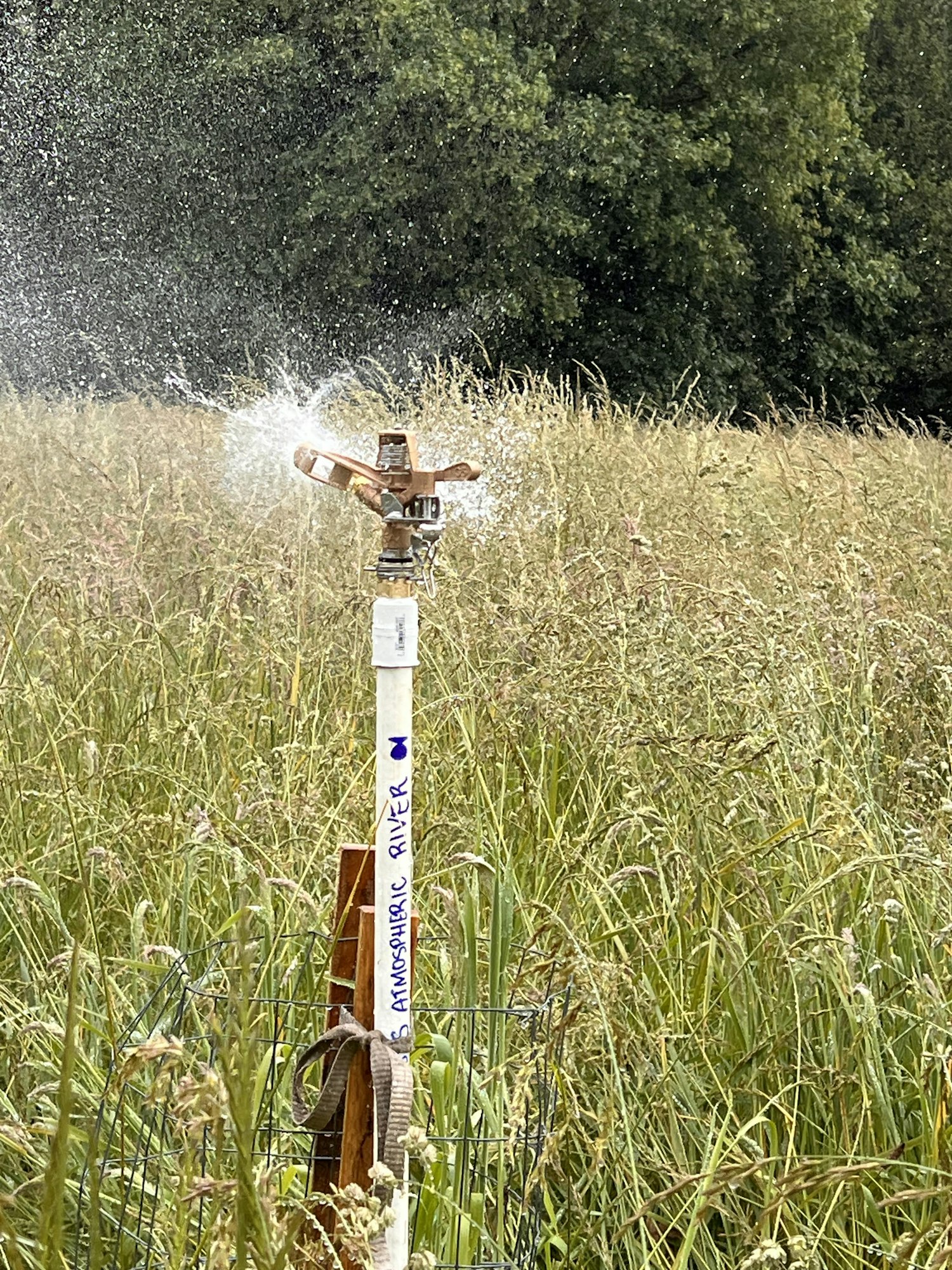
To give the new plantings the best chance of success, Coos SWCD partnered with the landowner to install a sprinkler irrigation system along the project area. This system helped sustain the young trees and shrubs through periods of high summer temperatures, reducing plant losses and improving survival rates.
Continuing the Restoration Effort
Riparian restoration is a long-term investment, and maintaining a healthy streamside buffer requires ongoing care. To replace plants lost during the first growing season and strengthen the restoration area, Coos SWCD will conduct supplemental planting during the upcoming winter.
Additional native seedlings will be sourced from local nurseries, and willow cuttings will be collected near the project site to further enhance the stream corridor.
Lasting Benefits for the River
As the riparian buffer continues to grow, it will provide lasting benefits for the East Fork of the Coquille River, including:
- Reduced streambank erosion
- Improved water quality
- Cooler water temperatures
- Enhanced fish and wildlife habitat
- Greater resilience to flooding and changing environmental conditions
The Sitkum Riparian Enhancement Project demonstrates how collaboration between landowners, volunteers, and conservation partners can create meaningful, long-term improvements for local waterways and the communities that depend on them.
Interested in Riparian Restoration?
Healthy streamside vegetation is one of the most effective tools for protecting water quality and improving habitat. Coos SWCD can help landowners explore restoration options that fit their property goals while benefiting local streams and wildlife. Contact us to learn more.