Lower Coquille SIA: Lampa Creek Riparian Restoration
Restoring Lampa Creek: Better Habitat, Healthier Water, Stronger Farms
When three neighboring landowners along Lampa Creek reached out to the Coos Soil and Water Conservation District (SWCD), they shared a common goal: improve salmon habitat, reduce erosion, control invasive blackberries, and create a safer environment for their livestock.
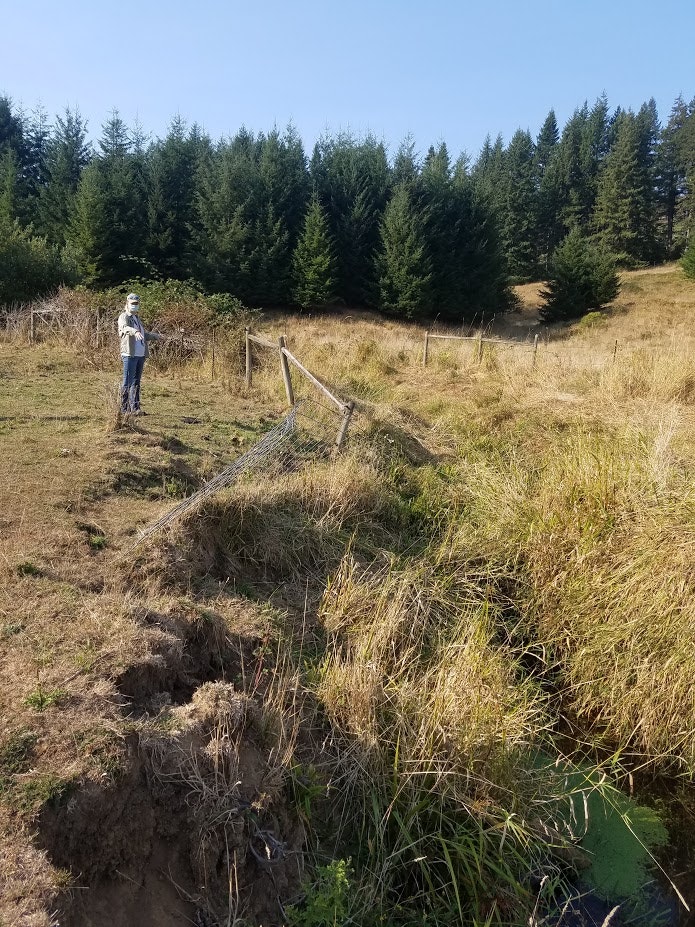
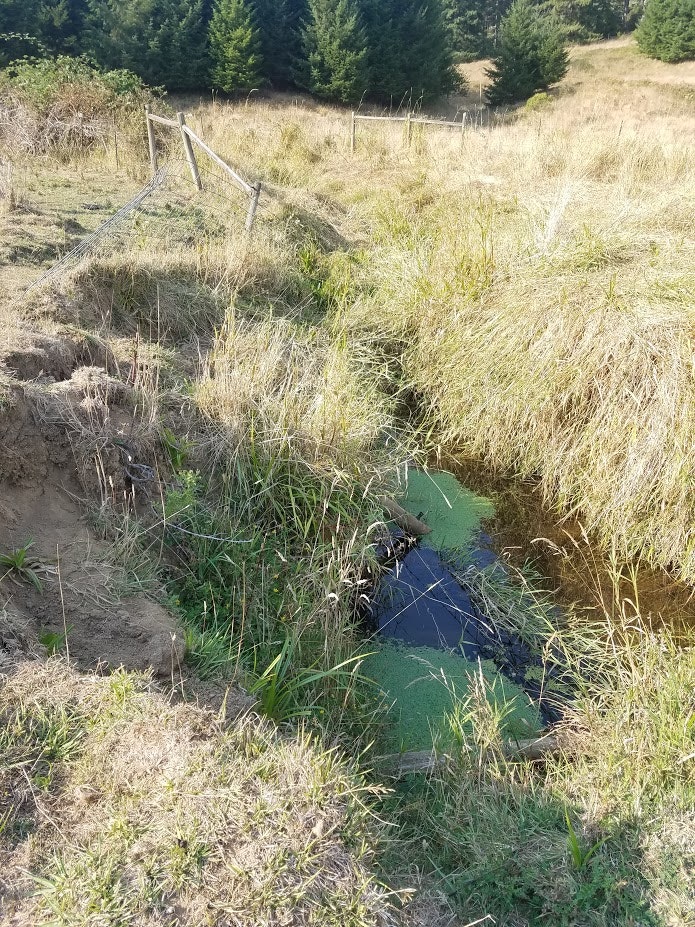
Lampa Creek is a valuable tributary of the Lower Coquille River and an important stream for coho salmon. Thanks to previous restoration efforts, much of the creek already benefits from healthy streamside vegetation that helps cool the water and stabilize the banks. However, several sections still faced ongoing erosion, invasive blackberry infestations, and livestock impacts.
One landowner had even lost goats to drowning and hypothermia after they accessed the creek, highlighting the need for a solution that would benefit both the environment and agricultural operations.
Finding the Right Solution
Coos SWCD staff worked closely with the landowners to evaluate conditions along the creek and develop a plan tailored to their needs. While some sections of the stream were healthy and well-protected by mature trees, other areas showed significant bank erosion where vegetation was lacking.
Livestock movement along the creek banks was contributing to erosion, and large patches of invasive blackberry were crowding out native plants. An aging streamside fence, nearly 20 years old, was no longer providing effective protection and needed replacement.
From Planning to Action
With grant funding secured, restoration work got underway. Crews removed the old fence, cleared invasive blackberry patches, and installed a new streamside fence designed with landowner input to ensure access and operational needs were met.
The results were immediate. Excluding livestock from vulnerable streambanks allowed vegetation to recover, helping stabilize the soil and reduce erosion. Areas that were once bare are now covered with healthy green grass.
To build on this progress, Coos SWCD planted native trees along the protected stream corridor. As these trees mature, they will:
- Provide shade that helps keep water temperatures cool for salmon
- Create valuable cover and habitat for juvenile fish
- Strengthen streambanks with extensive root systems
- Improve long-term water quality and stream health
Many of the young trees were protected with wire cages to prevent damage from beavers while they become established.
Staff conducted plant surveys in 2025, and the native riparian plants were over 6 foot tall and have helped provide vital habitat for native species.
Benefits Beyond the Creek
The project has also improved ranch management. The new fencing excludes livestock from waterways, preventiung drowning and the loss of animals.
While any new fence requires maintenance, Coos SWCD works with landowners to design systems that improve grazing efficiency while protecting valuable natural resources.
Interested in Streamside Fencing?
Whether you're looking to improve water quality, reduce erosion, enhance fish habitat, or strengthen your grazing operation, streamside fencing can provide lasting benefits for both your property and local waterways.
Coos SWCD can help design a fencing and restoration plan that works for your land, your livestock, and your conservation goals. Contact us to learn more.